

🌫️ Euphoria (2026) – A Restless Drama on the Illusion of Happiness, the Reality of Pain, and the Fragmentation of the Human Psyche

🎬 Introduction
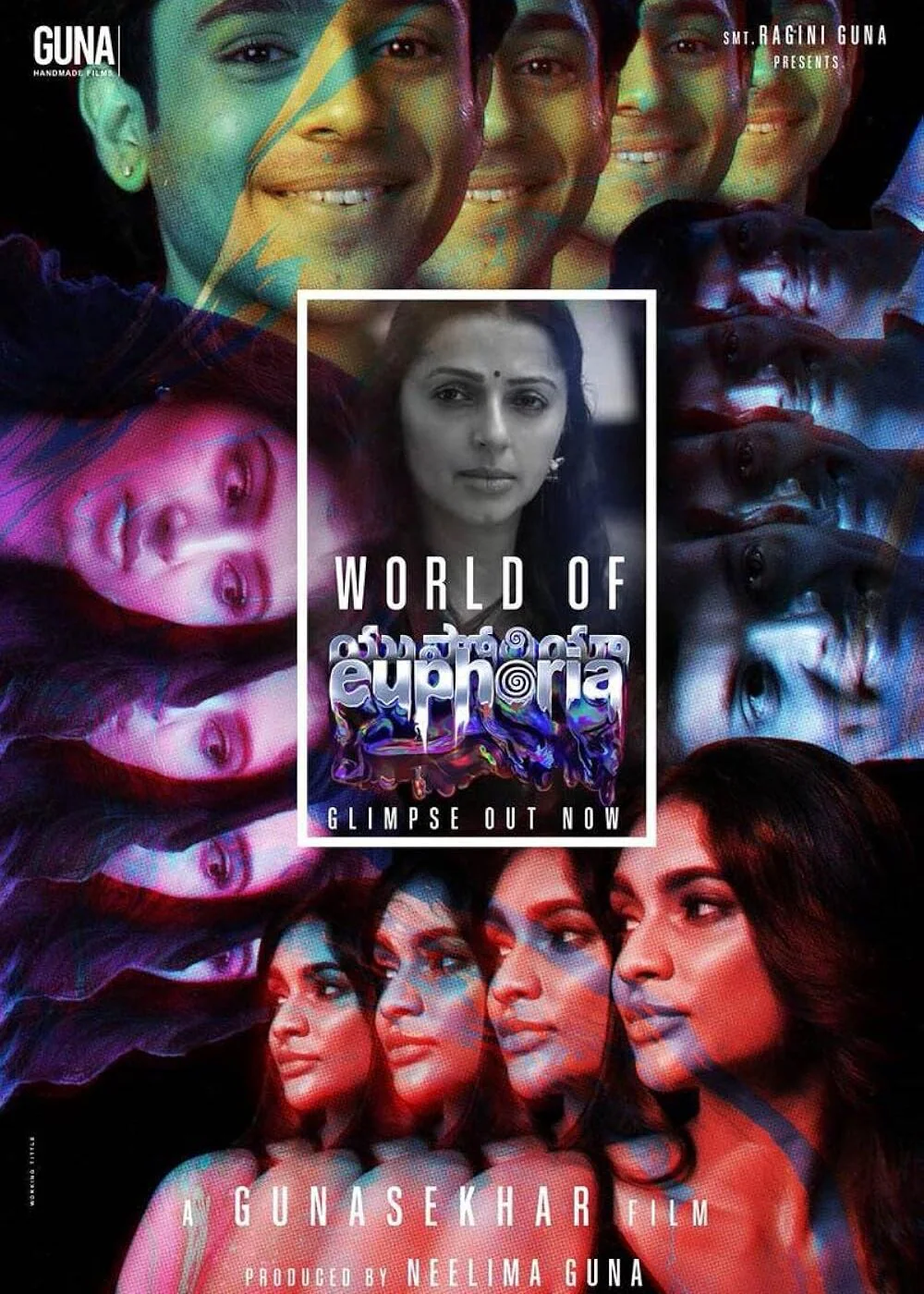
The word ‘Euphoria’ itself holds a promise — of joy, exhilaration, an emotional high. But when cinema uses such a word as a title, its purpose is often the opposite. Euphoria (2026), directed by Gunasekhar, appears to be just such a film, aiming to unveil layers of dissatisfaction, fragmentation, and mental conflict beneath the veneer of happiness.
In Telugu cinema, where drama often devolves into melodrama or becomes preachy, Euphoria seems to deviate from that safe path. This film is not the story of a single protagonist or a single conflict, but a collective portrait of incompleteness spread across multiple lives.
Scheduled for release on February 6, 2026, this film relies not on its star power, but on its subject matter and tone. The presence of actors like Rajasekhar Aningi, Sara Arjun, Bhumika Chawla, and Gautham Vasudev Menon makes it clear that this film is not going to be loud and bombastic, but rather subtly impactful.
🎥 Director’s Vision
Gunasekhar is often known in Telugu cinema for grandeur, historical epics, and large-scale productions. But Euphoria is one of those films in his career where he shifts his focus from external spectacle to internal conflict.
Here, the director’s camera doesn’t linger on battlefields or palaces, but on the faces of people, their eyes, and their silences. In this film, Gunasekhar raises the question:
His approach is not to judge any character as right or wrong. He views each character within their circumstances. This is why the film doesn’t deliver judgments, but instead leaves behind unsettling questions. —
📊 Technical Details Table
| Category | Information |
|---|---|
| Film Title | Euphoria |
| Release Date | February 6, 2026 |
| Language | Telugu |
| Genre | Drama |
| Director | Gunasekhar |
| Writers | Gunasekhar, Krishna Hari |
| Cinematography | Praveen Kumar Pothan |
| Music | Kala Bhairava |
| Cast | Rajasekhar Aningi, Sara Arjun, Adarsh Balakrishna, Bhumika Chawla, Keshav Deepak, Vignesh Gavireddy, Kalpalatha, Gautham Vasudev Menon, Likith Naidu, Nassar, etc. |
| Producers | Neelima Guna, Yuktamukhi |
| Production | Gunaa Teamworks, Handmade Productions |
🧭 Story (Narrative & Themes – Spoiler-Free)
Euphoria doesn’t follow a single plot line. It’s a multi-layered drama where people of different ages, classes, and mental states come together under a shared emotional umbrella.
The central theme of the film is ‘happiness’ — but the gap between the happiness society portrays and the happiness an individual truly feels. Sara Arjun’s character stands at that crossroads of adolescence where expectations become a burden. Bhumika Chawla represents a woman who has long buried her desires under the weight of responsibilities.
Rajasekhar Aningi’s character is like the soul of this film — a person who appears calm on the outside, but is constantly breaking down within. Gautham Vasudev Menon’s presence gives the film a philosophical depth, as if he is less a part of the story and more the voice of conscience.
This film is driven more by emotional states than by events. The climax is not an explosion, but a quiet acceptance.

🎞️ Trailer Reaction
The trailer for Euphoria is completely different from traditional Telugu drama trailers. It doesn’t feature fast-paced dialogues or emotionally charged background music. The trailer is filled with empty rooms, lingering gazes, and long pauses.
The most impactful shot is of Sara Arjun’s eyes — where there are more questions than answers. On social media, the trailer has been described with words like “mature,” “uncomfortable but honest,” and “emotionally dense.”
🎵 Music and Sound Design
Kala Bhairava’s music in Euphoria doesn’t dictate the emotions, but rather gives them space. The background score is often minimal, and at times completely absent.
This film teaches that sometimes silence is the most precise music. The songs (if any) don’t interrupt the narrative, but flow with its rhythm.
🎭 Performances
The greatest strength of this film is its ensemble cast. No single actor dominates the film.
- Sara Arjun delivers a remarkably mature performance. She portrays innocence and unease without any theatricality.
- Bhumika Chawla’s performance is restrained and filled with pain — without uttering a single major dialogue.
- Rajasekhar Aniningi makes the internal turmoil believable.
- Gautham Vasudev Menon makes an impact even in his limited screen time.
These performances don’t scream for attention, but slowly settle within you.
🎥 Cinematography and Visual Tone
Praveen Kumar Pothan’s cinematography gives the film visual honesty. The use of light changes according to the emotional state. The frames are often open, yet the characters are alone. This contrast aligns with the film’s theme.
🌍 Potential Audience and Critics Response
Euphoria is not for every viewer. This film will appeal to those who seek emotional complexity in cinema. Critics might consider this one of Gunasekhar’s most personal films. However, some viewers might find its slow pace and emotional weight challenging.
⚔️ ⚔️ Strengths & Weaknesses
Strengths
- Deep and honest themes
- Powerful performances
- Restrained direction
- Balanced use of silence and sound
Weaknesses
- Slow narrative pace
- Limited commercial appeal
- Lack of a clear resolution
🎬 Conclusion
Euphoria is a film that doesn’t tell you how to be happy—instead, it shows you how fragile the illusion of happiness is. You’ll leave the theater feeling not lighter, but perhaps a little heavier—and that’s probably the point.
If you consider cinema not just entertainment but a form of self-reflection, then Euphoria is for you.
⭐ Estimated Rating: 4/5






There are no reviews yet.